Raul Valle · University of Florida · Gainesville, Florida

Machine Learning for Physical and Neural Systems.

I build machine-learning systems for hard physical and biological data: surrogate models for computational fluid dynamics in the SmartDATA Lab, event detection and source separation for neural imaging, and the research software that keeps experiments honest. I am a Ph.D. student in Electrical and Computer Engineering at the University of Florida.

Portrait of Raul Valle

Featured projects

The highest-signal project pages that explain what I am building and why it matters.

Diagram of CFD surrogate modeling: high-fidelity solver snapshots and physics constraints train neural operators, mesh graph networks, and latent-dynamics models that produce fast predictions audited for stability and physical consistency.
Research · scientific ML · SmartDATA Lab

Learning surrogate models for computational fluid dynamics

Ph.D. research in the SmartDATA Lab: learned surrogates that stand in for expensive CFD solvers, judged on stability, physical consistency, and generalization.

Neural operatorsMesh graph networksPhysics-informed trainingLatent dynamics
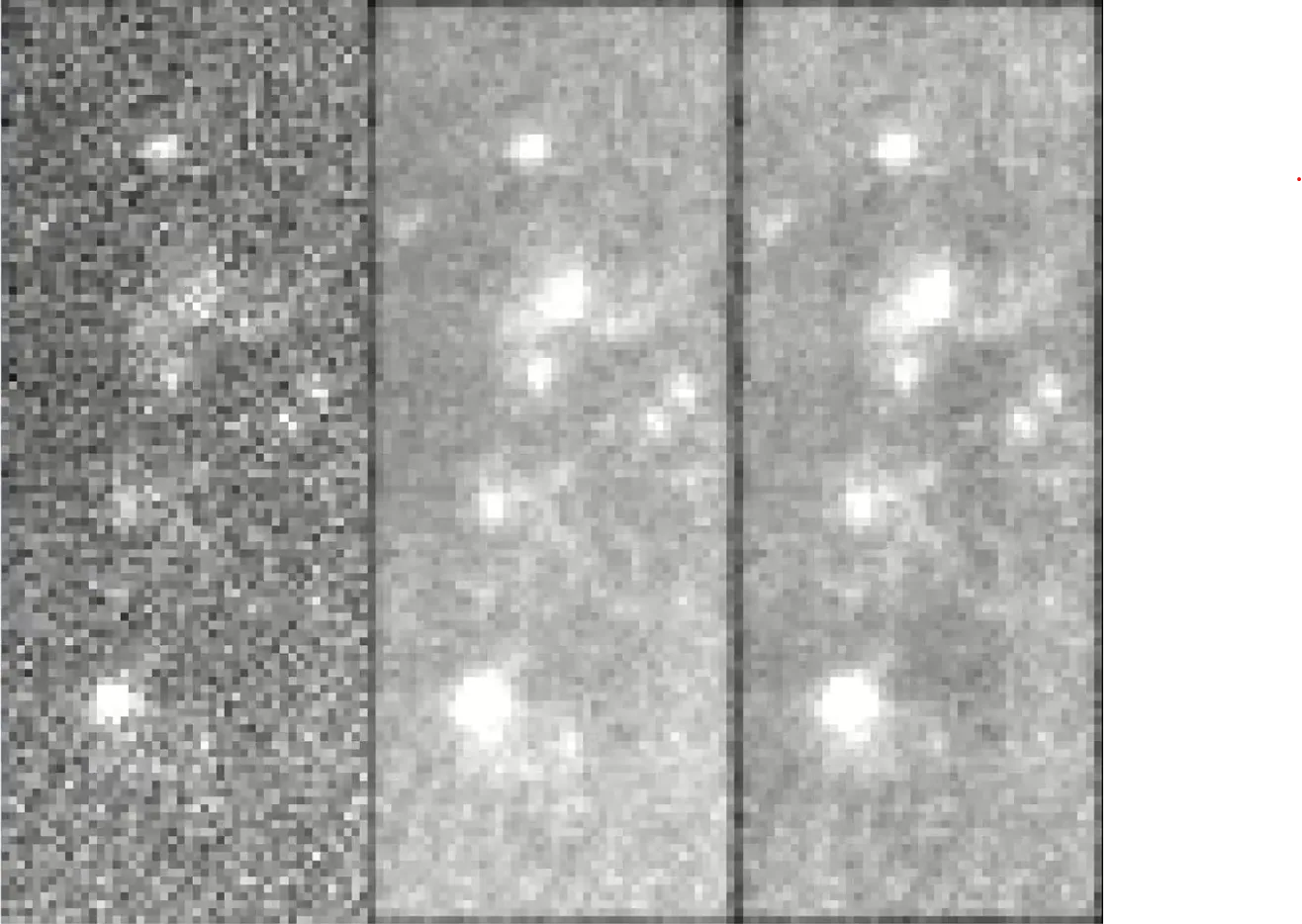
Diagram of Kernel Adaptive Memory: a sequence feeds radial context attention and learned persistent supports before a residual readout and optional online NLMS adaptation.
Research · sequence modeling · adaptive memory

Kernel Adaptive Memory: a transformer alternative for sequence modeling

A proposal for a transformer alternative: use a learned radial geometry for local context, a finite bank of persistent supports for reusable structure, and a lightweight online readout for adaptation after distribution shift.

Radial kernel attentionPersistent memory supportsTransformer comparisonOnline NLMS adaptation
Diagram of a hierarchical dynamical system: noisy observed signals generate compact latent trajectories used by a classifier.
Research · dynamical systems · classification

Latent-signal classification with hierarchical dynamical systems

Pipeline that maps noisy multichannel time-series observations to compact latent trajectories with a Hierarchical Linear Dynamical System (HLDS), then evaluates those trajectories for classification, separability, and stability.

Hierarchical Linear Dynamical System (HLDS)Latent-signal classificationTemporal representation learning
Frame from a zebrafish neural imaging video.
Research · neural imaging · signal separation

Zebrafish neural imaging: event detection & source separation

Research platform for zebrafish neural-imaging video: statistical event detection for voltage recordings and a calcium-imaging experiment program that separates activity from background, artifacts, and noise.

Voltage & calcium imagingEvent detectionSource separationStatistical detection

Personal projects

Standalone projects with their own public homes, separate from the research archive.

Personal app

Ora

A training console for athletes and coaches: programs, diet tracking, progress reports, and coach review in one place.

Personal app

Gradus

A practice platform for STEM students built to find the exact idea you missed: attempt a problem, get targeted feedback, repair the gap, and prove it in a new context.

Latest writing and elsewhere

Zebrafish calcium-imaging field with the current annotated regions projected over the recording.
Jul 30, 2026 · Research log

Source separation for zebrafish calcium imaging

The strongest result was not a single winning denoiser: preserving the activity carrier and using spatial separation features for ranking proved more reliable.

calcium imagingsource separationsignal processingneuroengineering